1

The Blue Bird: A Fairy Play in Six Acts — Inside the Classic
(0 User reviews)
2694
Project Gutenberg
2005
Not confirmed
Fairy plays; French drama -- Translations into English
Readers of public-domain and historical texts
Project Gutenberg digital edition
en
Edition facts
Words
35,868
Reading time
156 min
Text sections
5
The catalog record for The Blue Bird: A Fairy Play in Six Acts — Inside the Classic provides practical reading context through 35,868 words, 2 hr 36 min estimated reading time, and 5 detected text sections.
The text analysis averages about 10.5 words per sentence, while the detected sections provide another way to judge how the source is divided.
Project Gutenberg metadata also associates the work with “Fairy plays,” connecting these edition facts with the source record’s subject description.
Source:
Project Gutenberg record #8606
Maurice Maeterlinck's fairy play follows two children, Tyltyl and Mytyl, as they search for the Blue Bird of happiness, guided by Light and accompanied by personified animals and objects. The excerpts reveal a world where trees and animals rebel against humans, and where abstract concepts like Night and Happiness have palaces.
Read the complete public-domain text at its original source.
Read on Project GutenbergMaurice Maeterlinck's The Blue Bird is a six-act fairy play that opens in a wood-cutter's cottage and quickly expands into a metaphysical quest. The catalog subjects—"Fairy plays" and "French drama—Translations into English"—accurately describe its genre and origin, but the excerpts reveal a more complex work. The play's characters include not only the children Tyltyl and Mytyl but also personified abstractions like Light, Night, and the Dog, who speaks in a colloquial, loyal tone. The forest scene (Act III, Scene 2) shows trees and animals rebelling against the children, a detail that aligns with the fantasy label but also hints at darker, allegorical undercurrents.
A Play of Personified Forces
The excerpts demonstrate that The Blue Bird relies heavily on personification. Light is a guiding figure with a "moon-coloured" dress, while the Dog (Tylô) and Cat (Tylette) have distinct personalities: the Dog is fiercely loyal, the Cat hypocritical. In the forest, the Oak, Elm, and other trees attack the children, and the Dog remarks, "They are all against us!" This extends to abstract entities: Night presides over a palace, and Happinesses are gathered in enchanted palaces. The play thus blends fairy-tale conventions with a symbolic landscape where every element—animal, plant, or concept—has agency and voice.
The Quest Structure and Its Tensions
The children's search for the Blue Bird drives the plot, but the excerpts show that the quest is fraught with danger and moral ambiguity. In the forest, Tyltyl draws a knife to defend himself, and Light warns, "Man is all alone against all in this world." The play's structure—six acts with scenes titled "The Palace of Night," "The Forest," "The Palace of Happiness"—suggests a journey through allegorical realms. Yet the excerpts also include a translator's note indicating that a new act (Palace of Happiness) was added for a 1910 revival, replacing the forest scene in performance but retained in print. This editorial history hints at the play's flexible, evolving form.
Costume and Stage Directions as World-Building
The detailed costume descriptions in the excerpts are not mere production notes; they embed the play in a specific fairy-tale tradition. Tyltyl wears "Hop o' my Thumb" clothes, Mytyl is dressed like "Gretel or Little Red Riding-hood," and the parents resemble "German wood-cutters and peasants in Grimm's Tales." These references link the play to Perrault and the Brothers Grimm, grounding its fantasy in recognizable folklore. Stage directions also emphasize transformation: the forest becomes light when Light enters, and the diamond turns objects' souls visible. The play thus uses visual spectacle to convey its themes, making the costumes and scenery integral to the narrative.
Readers approaching The Blue Bird should note that the excerpts cover only portions of Acts III and IV, leaving the full arc of the quest—including the Kingdom of the Future and the awakening—unseen. The play's blend of child protagonists and philosophical allegory rewards attention to its stage directions and character voices, which often carry the thematic weight. The catalog label "Fantasy & Juvenile Worlds" fits, but the work's darker moments and symbolic density suggest it was designed for audiences of all ages.
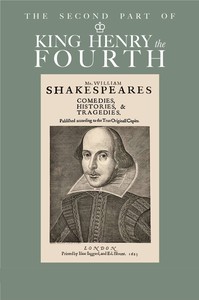
Rain fell against the window, and I kept returning to Maeterlinck’s strange woods, where the trees spoke of old grievances against men. That trembling at the edge of daylight felt familiar, less fairy-tale than history. Somehow it nudged me toward the politics of succession, the weary crowns and fragile truces in something like King Henry IV, Part 2 — Background and Themes. Both worlds know that happiness is a duty, and power a shadow.
There are no reviews for this eBook.
There are no comments for this eBook.
Reader reflection
What did you think of this book?
Answer a few questions and save a private reflection on this device.
Your progress
0
/
10
2
Did this book hold your interest?
3
Is this a title you would suggest to others?
4
How demanding did the text feel?
5
How strong was your personal connection to the text?
6
How useful were the ideas in this book?
7
How original did the book feel?
8
Do you expect to return to this book?
9
What changed or sharpened your thinking?
10