1

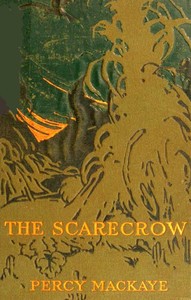
The Scarecrow; or The Glass of Truth: A Tragedy of the Ludicrous — Reading Companion
(0 User reviews)
689
Project Gutenberg
2018
Not confirmed
American drama; Witches -- Drama; Devil -- Drama; Massachusetts -- History -- Colonial period, ca. 1600-1775 -- Drama; Scarecrows -- Drama
Readers of public-domain and historical texts
Project Gutenberg digital edition
en
Edition facts
Words
27,633
Reading time
121 min
Text sections
14
The catalog record for The Scarecrow; or The Glass of Truth: A Tragedy of the Ludicrous — Reading Companion provides practical reading context through 27,633 words, 2 hr 1 min estimated reading time, and 14 detected text sections.
The text analysis averages about 9.9 words per sentence, while the detected sections provide another way to judge how the source is divided.
Project Gutenberg metadata also associates the work with “American drama,” connecting these edition facts with the source record’s subject description.
Source:
Project Gutenberg record #57156
Percy MacKaye's 1908 play transforms Nathaniel Hawthorne's 'Feathertop' into a four-act tragedy of the ludicrous, where a scarecrow brought to life by a witch and a devilish tutor rehearses courtly phrases in Puritan New England, only to discover his own hollow reflection.
Read the complete public-domain text at its original source.
Read on Project GutenbergPercy MacKaye's 1908 play, subtitled 'A Tragedy of the Ludicrous,' opens with a preface acknowledging its debt to Nathaniel Hawthorne's 'Feathertop' from Mosses from an Old Manse. The stage directions and dialogue immediately establish a tone of dark comedy: the scarecrow, named Ravensbane, is coached by the devilish Dickon in elaborate courtly speeches, rehearsing phrases like 'Believe me, ladies, with the true sincerity of the heart' and quoting Virgil. The setting—a Puritan New England cottage—contrasts sharply with the absurdly refined behavior being drilled into a creature made of pumpkin, crow's wings, and broomstick.
The Devil as Tutor and Stage Manager
Dickon, the devil figure, functions as both director and puppeteer. In the excerpt, he praises Ravensbane as 'thou exquisite flower of love' and 'the Apollo Belvedere' among scarecrows, while simultaneously controlling his every gesture. The rehearsal scene reveals a power dynamic: Dickon corrects Ravensbane's inflection ('a little more lachrymose'), but the scarecrow soon asserts himself, snapping 'Stop talking; permit me! A tutor should know his place.' This early tension hints at the creature's growing willfulness. Dickon's language is theatrical—he references Beaumont and Fletcher, calls Ravensbane 'my darling homunculus'—blending diabolical mischief with a connoisseur's delight in his own creation.
Ravensbane's Double Nature: Puppet and Suitor
The scarecrow oscillates between mechanical obedience and genuine longing. When Dickon hands him a book to appear scholarly, Ravensbane flings it into the fireplace, crying 'She does not come!'—referring to Mistress Rachel. His despair is childlike, but his earlier challenge speech reveals a calculated arrogance: he chooses 'combative utensils most appropriate both to his own humble origin and to local tradition,' pointing to flails on a table. The stage direction 'Frowning darkly at Dickon' suggests a creature capable of menace. MacKaye builds the character through these contrasts: a patchwork being who can quote Virgil yet throws tantrums, who bows with courtly grace but threatens violence.
The Glass of Truth as Structural Motif
The play's full title—The Scarecrow; or The Glass of Truth—points to a central prop that does not appear in these excerpts but is foreshadowed by the scarecrow's obsession with self-image. In Hawthorne's original, the mirror reveals the scarecrow's true nature; MacKaye likely adapts this device. The rehearsal scene emphasizes performance and illusion: Ravensbane practices roles (courtier, duelist, lover) while Dickon applauds his 'histrionics.' The 'glass of truth' would shatter this constructed identity. Readers should watch for how the play stages the moment of self-recognition—whether through a literal mirror or through the reactions of other characters.
Puritan Setting as Comic and Tragic Frame
The catalog subjects place the play in 'Massachusetts -- History -- Colonial period, ca. 1600-1775,' and the excerpts mention 'Squire Talbot,' 'Captain Bugby,' and 'the Governor's secretary.' Yet the supernatural elements—a witch, a devil, a living scarecrow—clash with the historical setting. MacKaye uses this friction for both humor and pathos. The scarecrow's elaborate manners are absurd against the plainness of Puritan society, but his desire to be accepted as human is genuine. The subtitle 'Tragedy of the Ludicrous' suggests that the comedy will curdle: a creature who learns to feel but cannot escape his origins. The opening scenes establish a world where social performance is everything, and authenticity is a dangerous luxury.
Readers approaching The Scarecrow for the first time should attend to the play's dual nature: it is both a period comedy of manners and a fable about identity. MacKaye's verse and prose shift between high-flown rhetoric and earthy humor, mirroring the scarecrow's own incongruity. The excerpts offer only a glimpse of the full arc, but they suggest that the 'glass of truth' will force a reckoning not just for Ravensbane, but for the human characters who mistake appearance for substance.
The rain kept pace with the scarecrow’s hollow, courtly bows, and I closed The Scarecrow feeling oddly fond of its staged absurdity. That afternoon’s mood drifted, almost by accident, toward a stranger stage: The Mormons and the Theatre; or, The History of Theatricals in Utah — Context and Discussion—a quiet reminder that every community rehearses its own curious illusions, even under a very different sky.
There are no reviews for this eBook.
There are no comments for this eBook.
Reader reflection
What was your reading experience?
Capture what you thought, learned, and would like to remember.
Your progress
0
/
10
2
How much did you enjoy the reading experience?
3
Would you recommend this book to another reader?
4
How easy was the book to follow?
5
How did the pace of the book feel?
6
Do you expect to return to this book?
7
Did you gain anything practical from the text?
8
Did you relate to its people, ideas, or situations?
9
What did this book teach you most?
10