1

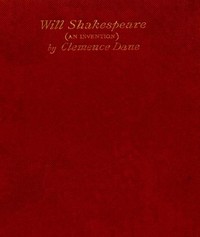
Will Shakespeare: An Invention in Four Acts — Context and Discussion
(0 User reviews)
1352
Project Gutenberg
2015
Not confirmed
Shakespeare, William, 1564-1616 -- Drama; Historical drama; Dramatists -- Drama
Readers of public-domain and historical texts
Project Gutenberg digital edition
en
Edition facts
Words
32,731
Reading time
143 min
Text sections
10
Before opening Will Shakespeare: An Invention in Four Acts — Context and Discussion, the edition data offers a quick orientation: 32,731 words, 2 hr 23 min estimated reading time, and 10 detected text sections.
The text analysis averages about 10.9 words per sentence, while the detected sections provide another way to judge how the source is divided.
Project Gutenberg metadata also associates the work with “Shakespeare, William, 1564-1616 -- Drama,” connecting these edition facts with the source record’s subject description.
Source:
Project Gutenberg record #50712
Clemence Dane's 1921 play imagines Shakespeare as a young man torn between Anne Hathaway and Mary Fitton, with Marlowe as a rival. The verse dialogue echoes Shakespearean style while inventing private conflicts behind the public genius.
Read the complete public-domain text at its original source.
Read on Project GutenbergClemence Dane's Will Shakespeare: An Invention in Four Acts (1921) opens not with the playwright at his peak but with a twenty-year-old Shakespeare hunched over papers in a Stratford cottage, while Anne Hathaway moves silently about her domestic tasks. The stage directions emphasize his dark, slight figure and low, clear voice—details that ground the historical figure in physical specificity. The play's subtitle, "An Invention," signals its freedom from strict biography; Dane creates private scenes that the historical record leaves blank, such as the tense love triangle with Mary Fitton and the competitive friendship with Christopher Marlowe. The excerpts show a verse style that borrows Shakespearean cadences—apostrophes to the wind, invocations of divinity—while maintaining its own rhythmic identity. The catalog subjects list this as "Adventure & Picaresque Fiction," yet the text is a four-act drama, not a novel, and its action is largely interior, driven by poetic dialogue rather than outward adventure.
Genre and Catalog Mismatch
The Project Gutenberg record classifies Will Shakespeare under "Adventure & Picaresque Fiction," but the excerpts reveal no picaresque structure or adventurous plot. The play is a historical drama in verse, focused on emotional and creative conflicts. The catalog subjects—"Shakespeare, William, 1564-1616 -- Drama; Historical drama; Dramatists -- Drama"—are more accurate, though they miss the play's central invention: the relationship with Mary Fitton, who appears as a major character. The excerpts show no sword fights, journeys, or roguish exploits; instead, the action consists of conversations, soliloquies, and intimate confrontations. Readers expecting a picaresque tale will find instead a psychological portrait rendered through heightened language.
Verse as Character Revelation
Dane crafts distinct verse voices for her characters. Shakespeare's lines in Act I are halting and self-conscious: "speech lies on my lips / Like a strange finger hushing back my soul." Marlowe, by contrast, speaks with confident fluency, teasing Shakespeare about his productivity: "Man, how you've worked! A whole act to my ten lines!" Mary Fitton's speeches are the most rhetorically elaborate, as when she reimagines Eden: "Long shall the sworded angels stand at ease / And idly guard the undesired delight." These stylistic differences do more than distinguish personalities—they dramatize competing ideas of poetic inspiration. The verse itself becomes a battleground between Marlowe's worldly ease, Shakespeare's tormented labor, and Mary's seductive philosophy of love as a conscious choice against divine order.
The Stage as Metaphor
Dane repeatedly uses theatrical imagery within the dialogue, blurring the line between the play's own artifice and the characters' self-awareness. Shakespeare tells Mary, "He was our audience," referring to God as a spectator who has now left the theatre of night. Mary later echoes this: "the play's done, / Lights out—all over—and here we stand alone." These meta-theatrical moments align with the play's structure as a drama about a dramatist. The stage directions also reinforce this: Act I's cottage set includes a window giving onto a "bare garden hedge and winter sky," while Act III's lodging has "a map of the known world" and a pot of flowers—details that mirror Shakespeare's expanding horizons. The play does not merely depict Shakespeare; it uses the conventions of theatre to explore how a life becomes a story.
Because the excerpts cover only Acts I and III, the full arc of the plot—including the resolution of the love triangle and the role of Queen Elizabeth—remains unclear. Readers should note that the play is a single, continuous invention, not a documentary. Dane's choices, such as giving Mary Fitton a philosophical voice equal to Shakespeare's, are deliberate anachronisms that prioritize emotional truth over historical accuracy. Approach the work as a poet's meditation on creativity and desire, not as a biography.
That rainy afternoon, Dane’s Shakespeare felt less like a genius and more like a man dodging his own choices. I closed it, restless, and my hand drifted to The Quiet Hotel: A Farcical Sketch in One Act — Story, Setting & Ideas—a title promising only doors and mistakes. The shift from verse to farce was oddly soothing, a lighter way of hiding from oneself.
There are no reviews for this eBook.
There are no comments for this eBook.
Reader reflection
What was your reading experience?
Capture what you thought, learned, and would like to remember.
Your progress
0
/
10
2
Was reading this book enjoyable?
3
Would you pass this book on to a friend?
4
How much effort did this book require?
5
How useful were the ideas in this book?
6
Did anything about the book feel genuinely new?
7
Was the book easy to understand?
8
Did any part of the book feel personally relevant?
9
Which lesson or insight stayed with you?
10