1

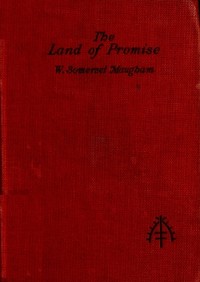
The Land of Promise: A Comedy in Four Acts — Context and Discussion
(0 User reviews)
700
Project Gutenberg
2015
Not confirmed
English drama -- 20th century; Great Britain -- Social life and customs -- 20th century -- Drama; Canada -- Description and travel -- Drama; Canada -- Emigration and immigration -- History -- Drama
Readers of public-domain and historical texts
Project Gutenberg digital edition
en
Edition facts
Words
30,555
Reading time
133 min
Text sections
7
The Land of Promise: A Comedy in Four Acts — Context and Discussion can be approached with a clearer sense of reading commitment from its source measurements: 30,555 words, 2 hr 13 min estimated reading time, and 7 detected text sections.
The text analysis averages about 11.2 words per sentence, while the detected sections provide another way to judge how the source is divided.
Project Gutenberg metadata also associates the work with “English drama -- 20th century,” connecting these edition facts with the source record’s subject description.
Source:
Project Gutenberg record #49918
Maugham's four-act play traces Norah Marsh's journey from a cluttered Tunbridge Wells drawing-room to a Canadian homestead. The excerpts reveal a shift from ornate, overfurnished interiors to a stark log shack, with dialogue that pivots from polite restraint to blunt, teasing exchanges, highlighting the contrast between English decorum and frontier directness.
Read the complete public-domain text at its original source.
Read on Project GutenbergThe play opens in a drawing-room so crowded with furniture—faded chintz armchairs, little tables, cabinets of china, silver-framed photographs, porcelain ornaments, and a wallpaper of enormous chrysanthemums—that the space feels stifling. The stage direction emphasizes an excess of things, a visual clutter that mirrors the social constraints of Tunbridge Wells. Into this setting enters Miss Pringle, a companion described as “thin and narrow of shoulders, with a weather-beaten, tired face,” whose worn appearance hints at the toll of genteel servitude. The first exchange, between the maid Kate and Miss Pringle, concerns the recent funeral of a Mrs. Wickham, establishing a mood of mourning and exhaustion. Norah Marsh, we learn, is “tired out” and has been kept from the funeral to avoid upset. The play thus begins not with action but with aftermath, in a room that feels both overfull and depleted.
Cluttered Interiors and Restrained Voices
The opening stage directions do more than set a scene: they establish a language of objects. The drawing-room is described with a catalogue of items—armchairs, tables, cabinets, photographs, ornaments, Chippendale chairs mixed with Tottenham Court Road pieces—that suggests a household clinging to respectability through accumulation. The wall-paper’s “enormous chrysanthemums” and the “large number of old-fashioned watercolours in gilt frames” reinforce a sense of dated, fussy gentility. Against this backdrop, the characters speak in measured, indirect phrases. Kate’s report that Norah is “tired out” and Miss Pringle’s inquiry about the funeral are delivered with a politeness that conceals strain. The wreath of white flowers in a cardboard box, left on a chair, becomes a silent emblem of loss. Maugham uses the room’s density to suggest a life hemmed in by expectations, where even grief is managed through social ritual.
A Shift in Setting and Speech
By Act IV, the scene has moved to a log shack in Canada. The stage directions are sparse: a stove, a table, a rocking-chair, a pail, a string bag. Where the first act was crowded with objects, here the space is defined by what is absent—milk, a cow, even a second room for sleeping and living. The dialogue shifts accordingly. Frank Taylor speaks in curt, declarative sentences: “I built it with my own hands. Every one of them logs was a tree I cut down myself.” Norah’s responses are quieter, often deflecting with a smile or a self-deprecating remark. When Frank tells her to sit down, she asks “Why?”—a small challenge that would be unthinkable in the Tunbridge Wells drawing-room. The exchange over tea without milk (“You try.”) encapsulates the adjustment required: Norah must learn to do without, and Frank must learn to ask rather than command. The language is more direct, but the power dynamics are still being negotiated.
Recurring Motifs: The Kettle and the Lamp
Two objects recur across the excerpts with symbolic weight. In the opening, the drawing-room contains “flowers in vases and growing plants,” but no practical tools. In the shack, the kettle and lamp are central. Norah puts the kettle on the stove; Frank pours water from a pail. The lamp is lit, and later Norah picks it up to look around. These are not decorative items but instruments of survival. Maugham draws attention to them through action: Norah “lifts the cover off the kettle and looks at it,” then pours water into the teapot. The lamp is used to inspect the shack, and Frank’s comment “Having a look at the shack?” turns the object into a cue for observation. The shift from ornamental to functional objects mirrors the play’s larger movement from a world of appearances to one of necessity. Even the string bag, brought from Winnipeg, carries the loaf and butter—provisions that must be fetched, not ordered.
Silence and the Unspoken
Norah’s quietness is remarked upon by Frank: “You ain’t terribly talkative for a woman, my girl.” She replies, “I haven’t got anything to say at the moment.” This exchange, early in their married life in the shack, points to a central tension. Norah’s silence is not submission but a form of self-protection. Earlier, in Tunbridge Wells, she was described as “tired out” and kept from the funeral—her voice suppressed by others’ decisions. In Canada, she speaks less, but her few words carry weight. When Frank asks her to pour tea, she complies with a “pretty smile,” but her earlier refusal to look at the bedroom (“No.”) is a clear boundary. Maugham uses pauses and stage directions—she “does not hear Frank come in, and starts violently”—to show a woman on edge. The play’s comedy, as labeled, may lie in these mismatched expectations: Frank expects a talkative wife; Norah expects a partner who asks, not tells. Their negotiations happen in the gaps between words.
Readers approaching The Land of Promise for the first time will benefit from attending to the stage directions as carefully as the dialogue. Maugham uses objects—the wreath, the kettle, the lamp—to signal emotional states and social transitions. The play’s four acts move from an overstuffed English parlor to a nearly empty Canadian shack, and the contrast is not just scenic but structural. Notice how characters’ speech patterns shift with their surroundings: the clipped, polite exchanges of Act I give way to the blunt, teasing rhythms of Act IV. The comedy, such as it is, emerges from the friction between old habits and new necessities. Watch for the moments when a character says less than they mean, or when an object does more than it should.
That afternoon, rain streaked the window while Norah traded her mother’s cluttered tea service for a Canadian axe, and I kept thinking how freedom arrives stripped of ornament. Later, browsing, I stumbled on a different four-act play set in a cellar, where poverty removes even the pretense of politeness. Both feel like rooms emptied until only truth remains. The Lower Depths: A Drama in Four Acts — Inside the Classic lingers the same way.
There are no reviews for this eBook.
There are no comments for this eBook.
Reader reflection
Record your reading impressions
A brief reflection can help important ideas stay with you longer.
Your progress
0
/
10
2
Did this book hold your interest?
3
How likely are you to recommend this book?
4
How demanding did the text feel?
5
How personally connected did you feel to the book?
6
How useful did the reading feel?
7
How would you describe its reading pace?
8
Is this a title worth rereading?
9
Which lesson or insight stayed with you?
10